Mostrando entradas con la etiqueta e-book. Mostrar todas las entradas

11.8.11

Revisitando Google Books

Once we convert atoms from physical books into digital bits, we can begin to change some of that [la dificultad de acceder físicamente al libro, que ese libro esté disponible en cantidades muy limitadas, o se encuentre en custodia de ciertas organizaciones o universidades]. While atoms remain fairly expensive, digital bits are on a trend where they become ever cheaper to produce, transport, and store. For example, providing every student in a school district with a paper copy of Shakespeare's Hamlet might cost thousands of dollars. Yet if those same students already have cell phones, laptops, or access to the Internet, then they can access a digital copy of Hamlet for just a fraction of the cost. Often times, public domain texts in digital form are more affordable and accessible to the public than their physical parents.

All of this of course assumes that a digital version of the book exists. I love going into work each morning knowing that we're working to convert atoms into bits and that by doing so, we hope to make knowledge more accessible. In a world where educational opportunities are often disproportionately allocated, it's exciting to think that today anyone with an Internet connection can download any of over one million free public domain books from Google Books. Who knows. Maybe some kid will read Treasure Island on their phone and be inspired to write their own great novel some day.
Download Over a Million Public Domain Books from Google Books in the Open EPUB Format
Wednesday, August 26, 2009 at 11:05 AM

9.8.11

¿Qué premian en los Publishing Innovation Awards?

Auspiciados por la Digital Book World, en noviembre cierra esta competencia de los mejores ebooks y enhanced ebooks creados en 2011 (año clave, en que la industria comenzó a transformarse a sí misma). Para tener en cuenta en la producción de tus ebooks:  Quality, Excellence, Design (QED). La QED Inspection check-list enumera:

1. Front matter: the title does not open on a blank page.
2. Information hierarchy: content is arranged in such a way that the relative importance of the content (heads, text, sidebars, etc) are visually presented clearly.
3. Order of content: check of the content to be sure that none of it is missing or rearranged.
4. Consistency of font treatment: consistent application of styles and white space.
5. Links: hyperlinks to the web, cross references to other sections in the book, and the table of contents all work and point to the right areas. If the title has an index, it should be linked.
6. Cover: The cover does not refer to any print edition only related content.
7. Consumable Content: The title does not contain any fill-in content, such as workbooks and puzzle books, unless the content has been re-crafted to direct the reader on how to approach using the fill-in content.
8. Print References: Content does not contain cross references to un-hyperlinked, static print page numbers (unless the ebook is intentionally mimicking its print counterpart for reference).
9. Breaks: New sections break and/or start at logical places.
10. Images: Art is appropriately sized, is in color where appropriate, loads relatively quickly, and if it contains text is legible. If images are removed for rights reasons, that portion is disclaimed or all references to that image are removed.
11. Tables: Table text fits the screen comfortably, and if rendered as art is legible.
12. Symbols: Text does not contain odd characters.
13. Metadata: Basic metadata for the title (author, title, etc.) is in place and accurate.
QED JUDGING PROCESS
1. The QED supports a reader’s ability to access their ebooks how they want, when they want, and on the screen they want. To ensure that a title meets the demands of the ebook reader, each title will go through the above check-list on multiple devices and in multiple formats.
2. To ensure that an ebook title submitted for a QED will render well on the device a reader chooses, be reviewed on three devices: a small, mobile-sized screen, an eInk reader-sized screen, and a tablet-sized screen.
3. To confirm that the title looks good in the most widely adopted formats, each ebook will be reviewed in ePub in a Webkit-based ereader application (like Apple’s iBooks), in ePub in an Adobe SDK-based ereader (like Bluefire or Adobe Digital Editions), and in Mobi in Kindle Previewer.

27.7.11

ePub 3, aproximaciones

"We can now reduce the use of 'decorative' pictures in our EPUBs. By 'decorative' I mean pictures we were displaying to simulate complex layouts to fit with the printed versions of the books. We can now use boxes with rounded corners, shadows, and blurring directly inside the CSS. It's a way to clean the code and make the book much more flexible. In addition to HTML5 and Javascript, it is a great new tool for us to play with", cuentan en Ebook empowerment with EPUB3 los editores de Walrus-books.

1.7.11

apps & ebooks

Hay algunas editoriales inglesas y desarrolladores editoriales, faber&faber, Enhanced Editions, el pibe apple que ganó el 2011 Apple Design Award, Mike Matas de Push Pop Press, que ya aparecieron en Bookie. Incluso apareció el parter digital de ff, Touch Press, cada vez más nombrado, y premiado, por sus desarrollos. La imagen que se me hace de Touch Press es la de un grupo de viejos amigos científicos que en sus ratos libres por gusto y dinero se pusieron a profesionalizar la programación orientada a edición.


En plan de apuntar, o registrar, en este blog ayudamemorias la aparición de otros nuevos ya viejos ebooks, agrego la app inspirada en el film de igual nombre, The Fantastic Flying Books of Mr. Morris Lessmore, creada por Moonbot Studios. El corto se puede ver en el sitio o descargarlo del iTunes, no se puede compartir, pero fijate que está bueno.

Y añado también a Fourth Story Media, de Estados Unidos, porque escuché en MICA 2011 a su representante, Lisa Holton, quien habló en la conferencia "La lectura en el siglo XXI: cómo el consumo de medios de niños y jóvenes influencia nuevos medios de edición", en el contexto del StoryDrive (seminario coorganizado por la Feria de Frankfurt y la Fundación El Libro, con el apoyo de la CAL). Ahí presentó una nueva forma de hacer libros, crear contenido para chicos y jóvenes, para ser distribuidos en websites, en teléfonos celulares, en diferentes plataformas y dispositivos, "and in new media forms that are only just beginning to develop", como dicen. Y, como dicen, hay que seguir investigando.


Since it’s launch, The Amanda Project has become an industry example in defining a engaging model for interactive fiction and transmedia storytelling.

14.6.11

"pack de supervivencia digital"

con el paso del tiempo, las tecnologías se vuelven obsoletas,
pero las personas quedan, y allí habrá que concentrar los mejores esfuerzos.
AIEI, "La edición digital en los países en desarrollo"


"Como señalamos repetidamente, no es necesario aguardar a que la tecnología del Sur se adapte a la del Norte, sino que puede avanzar con los materiales ya disponibles", dicen en el "Plan de acción" del estudio de la AIEI. Y porque queremos avanzar desde este pedacito de cielo, los Book producer pensamos up-up y nos preguntamos:

1. cuáles habrán sido las conclusiones de la pasada reunión de Libre Graphic Meeting, en Montreal, para mejorar el Scribus, porque sería fantástico tener acceso a un soft libre de dtp (acaso cuántos pueden diagramar con InDesign) que, además, exporte a ePub, que es el formato del momento, y que por el momento se va a usar y a usar (en convivencia con las app y los .mobi, al parecer);

2. por qué se sigue pensando al pdf como formato privilegiado de e-book;

3. por qué algunos dicen tener, o mejor dicho en qué consiste tener certificación de la IDPF, cuando el formato ePub es de estándares abiertos y hay un software de acceso libre de la misma IDPF para validar los archivos (es interesante rastrear la historia del actual presidente de esta organización, Bill McCoy, quien fuera el generador, junto a su equipo, del formato ePub y del Adobe Digital Editions antes de que dejara de trabajar para Adobe);

4. si no será mezclar peras con manzanas: el temor a la piratería, la falta de know-how, la ausencia de plataforma de e-commerce, los dispositivos inaccesibles por lejanos y caros, el estado actual de la tecnología para desarrollar e-books, la baja demanda y la necesidad imperiosa de contar con developers, entre otras cuestiones peliagudas;

5. en el punto 4 de "Investigación y desarrollo. Un laboratorio para los editores del Sur", de la investigación de la AIEI, qué querrá decir: "supervisar la vinculación con los centros de I+D del Sur y del Norte, así como sostener la comunidad de programadores ad honorem, a fin de resolver los desafíos técnicos presentados por los editores";

6. si a pesar de todo seremos capaces de seguir produciendo libros... y como creemos que sí, hoy a la noche en lugar de ver Curb your Enthusiasm, escuchamos un rato a Bill, que habla sobre algunas generalidades de la edición digital pero bien específicamente sobre los avances del ePub 3:


- We don't know what the "book/magazine of the future" will be so we can't hard wire for one particular embodiment of content & experience
- EPUB is an "innovation plataform" -enabling you to effectively distribute many kinds of content experiences, via a wide variety of channels

9.6.11

7.6.11

IndieCommerce, programa de la ABA

IndieCommerce es una plataforma de e-commerce desarrollada por la American Booksellers Association (ABA) para facilitarles a las librerías independientes, como las llaman, vender libros impresos y digitales. Parece que la plataforma está construida sobre Drupal, un sistema open-source de administración de contenidos. No sé muy bien todavía cómo es la alianza entre ABA y Google eBooks. Y la noticia de último momento es que, si bien no la CAL, Eudeba empieza en estos días a desarrollar tecnología para la publicación y el comercio de e-books. ¡A seguir investigando!

5.6.11

Openmargin


In short, *openmargin is the public margin within a digital book, it's the gathering place for the community of readers. With our iPad app people can read their books, make notes and exchange those notes with other readers in the margin next to the text.

1.6.11

faber & faber

Y el que sabe, sabe. Esta bella editorial inglesa, que ganó en lo que va de 2011 dos importantes premios en el Reino Unido (el Ingram Independent Publisher of the Year Award y el FutureBook Digital Innovation Prize junto a Touch Press por Solar System para iPad app), tiene una división llamada Faber Factory, donde ofrece a pequeñas empresas el servicio de conversión digital y distribución. Eso es aprovechar los recursos internos de la editorial.

faber & faber, en la Frankfurter Buchmesse 2010

25.5.11

"Los libros destacan en el medio millón de apps en Apple"

"los libros están en la segunda categoría más descargada (14%), a poca distancia de los juegos (15%) [en la App Store]."


Millán, en su L&B.

17.5.11

El libro mañana. El futuro de la palabra escrita

Los primeros días de junio la Unesco llevará a cabo el segundo foro mundial sobre cultura e industrias culturales. Esta vez tendrá al libro digital en el centro de todas las investigaciones y charlas: FOCUS 2011. The Book Tomorrow: the Future of the Written Word. 6-8 June 2011. Villa Reale di Monza. Lombardia. Italia.

Los temas que van a tratar, a grandes rasgos, son: "economía del libro" (blogs vs. diarios, el futuro de la lectura y la escritura, los cambios en la producción y los canales de distribución), los derechos de autor en la era digital (copyright vs. copyleft, libre uso y creative commons, preservación de la memoria digital) y la biblioteca digital (la biblioteca como servicio público, buenas y malas asociaciones entre entidades públicas y privadas, y los riesgos de la digitalización). Parece que están más o menos los de siempre, Darnton, Nunberg, Boos, Cavallo (Mondadori Italia), The Guardian, RH y entre otros... Stallman. Mirá vos.

"'la brecha digital' no separa países pobres de países ricos sino a los jóvenes de generaciones más adultas", dice en El País Milagros del Corral, presidenta del comité científico que organiza este encuentro.


Fuente: www.focus2011.org

10.5.11

Bookmarks...


Imagine a future where instead of lending someone a book, you lend them your bookmarks. Where your notes, annotations and references are synchronised across platforms and applications. Where your bookmarks belong to you, and a record of every book you read is saved and stored securely, no matter how or where you read it.
We're nearly there, and that's why we need Open Bookmarks.
Find out more on the blog.

James Bridle presentó Open Bookmarks en la TOC de Frankfurt 2010. Este es el artículo que preparó para la conferencia: "Walter Benjamin’s Aura: Open Bookmarks and the future eBook".

Mike Matas: A next-generation digital book


Push Pop Press TED Talk from Push Pop Press on Vimeo.
Software developer Mike Matas demos the first full-length interactive book for the iPad -- with clever, swipeable video and graphics and some very cool data visualizations to play with. The book is "Our Choice," Al Gore's sequel to "An Inconvenient Truth." Fuente: http://www.ted.com/talks/lang/spa/mike_matas.html.
En junio, esta app, desarrollada por Push Pop Press, ganó el 2011 Apple Design Award.


Al Gore's Our Choice Guided Tour from Push Pop Press on Vimeo.

5.5.11

The eBook Studio

Are you involved in eBook production? Or do you want to find out what it’s about? Then you should check out the #ePrdctn hashtag on Twitter. That’s where many smart and generous people involved in eBook production hang out, swap tips, and answer questions. Just attach “#ePrdctn” to the end of a Tweet for it to be picked up by others following the #ePrdctn feed. Or simply follow the tag, no participation required … but we’re a friendly bunch, so say “hi.” And just like that, you’ll be part of a diverse and active community.
Seguir leyendo en The Book Studio.

29.4.11

BISG's Consumer Attitudes Toward E-Book Reading

Para sumar a los informes sobre la industria editorial (el preparado por la Alianza Francesa de Editores Independientes, "La edición digital en países en desarrollo", y el de la Federación de Gremios de Editores de España*): la Book Industry Study Group, acaba de publicar su tercer reporte, esta vez centrado en Consumer Attitudes Toward E-Book Reading. Algunas de las preguntas que desarrollaron para una muestra representativa de lectores (hombres, mujeres y adolescentes), durante dieciocho meses, fueron:
  • When did you first begin acquiring e-books?
  • Where do you typically acquire e-books?
  • Which genre(s) are you more likely to read as an e-book rather than a print book?
  • What device do you now use most frequently to read e-books?
  • How likely are you to buy a dedicated e-reader such as Amazon Kindle, Barnes & Noble nook, or Sony Reader for yourself or to give as a gift (in the next 2 months)?
La información de prensa acerca de esto se puede seguir acá. Claro que Consumer Attitudes no es una publicación gratuita, hay que comprarla, y refiere al público lector estadounidense, pero como herramienta de investigación y prospección sirve. Así y todo, hay que tomar estas cuestiones con pinzas, el copete del artículo que da cuenta sobre esta novedad de la BISG, publicado en el New York Times, dice, por ejemplo: "BISG Study Reveals E-Book Buyers Are Accelerating Their Move Away From Print". En tan corto texto, el Accelerating y el E-Book Buyers tienen, al menos para mí, demasiadas implicaturas.

*Se puede leer un resumen del estudio Hábitos de Lectura y Compra de Libros en España 2010 publicado por la Federación de Gremios de Editores de España, en Lectura Lab o descargar el archivo .zip completo del site de la FGEE.

16.4.11

Comparación de e-books en Wiki

Cada vez más completo, el artículo de WikipediA "Comparison of e-book formats", no solo por la descripción de los dispositivos electrónicos de lectura existentes, sino por los links y las publicaciones que se pueden consultar en relación con la edición digital y los actores (editoriales y no editoriales) que intervienen en la publishing industry hoy.

31.3.11

Todo sobre ebooks!


¡Buenísimo! Le pongo diez bookies de una:
El Club del eBook, es la primera fuente de información sobre ebooks de Argentina. Acá vas a encontrar noticias, tips, tutoriales, recursos y opiniones sobre el mundo de los libros electrónicos.
¿Qué más querías? ¿Eh? 

29.10.10

Hot Spot en Frankfurt 2010


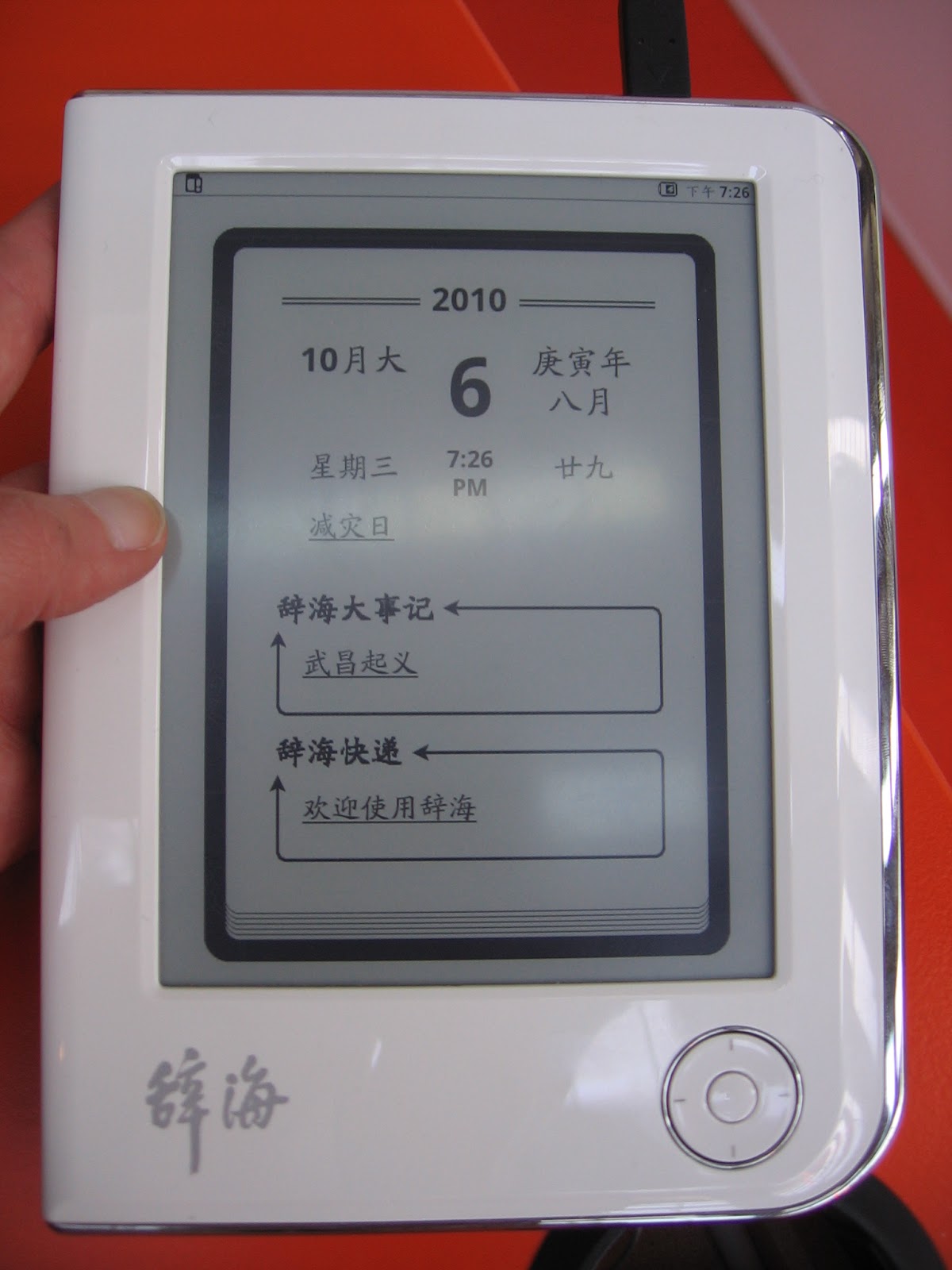
Con la consigna "Content meets Technology: publishing professionals meet up with technology businesses at the Frankfurt Book Fair's Hot Spots", se expusieron en diferentes puntos de la inmensa feria dispositivos, proyectos editoriales y proveedores de servicios para la edición digital. Estas son algunas imágenes de digital readers, made in China (mostly). Hice el “Hot Spot Tour to the Future of Publishing” por todos los pabellones de todos los países, y vi que prevalecían los servicios de autoedición. Más que azorarme por lo desconocido, me dieron ganas de estudiar y de aprender. Es tal la sensación de que se trata de algo incipiente que me llenaron, también, de vitalidad, pues en una conferencia reciente a los editores de nuestra generación nos habían restado chances de sobrevivir (!). "Content meets Technology" fue la frase guía de Juergen Boss en la apertura de la Messe, más allá del soporte, el negocio de los editores es el contenido, el contenido sin límites.

15.8.10

"Indeed, the insistence by some people that they will “never” give up the printed book — which leads to rather ludicrous glorification of the smell of the paper, ink, and glue and the nonsensical objections that the screen would be unsuitable for the beach (depends on the screen) or the bathtub (I can’t even imagine what the presumed advantage of the printed book is there) — must ignore the fundamental dynamic. Print books aren’t getting better. Ebooks are."

The printed book’s path to oblivion

Posted by Mike Shatzkin

3.8.10

"Cover art only sells physical books."

En TOC se puede leer un lindo y breve artículo sobre las características y la función de las cubiertas en la industria tal y como la conocíamos y en la new digital era, escrito por James Bridle, autor del blog booktwo.org. Bridle va a ser uno de los ponentes en la Tools of Change Frankfurt Book Fair Conference 2010.
The covers [de Odyssey] are typographic, and hark back in particular to the famous Pelican cover for John Berger's Ways of Seeing, where the text starts on the front cover. But it struck me that they are not covers in any traditional sense: they have nothing to cover. They are icons. Signifiers. And more crucially, they're not there to sell the book directly; they are marketing material separated from the point-of-sale.
Cover art only sells physical books. In an ideal world we would get rid of cover art altogether. This is probably what JD Salinger desired, in his refusal to countenance any imagery at all on his book covers (a request that continues to be honoured, notably in Hamish Hamilton and Seb Lester's beautiful new editions).
If we're going to continue to use "covers" as marketing material, which presumably we will as long as digital texts have physical counterparts, we need to recognise that their reproduction is out of our control: they will be copied, linked, and reposted, at different resolutions and sizes (there's long been a muttering desire from publishers for the ability to supply Amazon with different covers for different size displays: this is one option, but not one Amazon seems happy with). We might also recognise that there are potentially many different jobs for the cover to do.
What do covers do now? They appeal aesthetically (something hard to do at 120 pixels high). They give space to blurbs and plaudits (it's OK, we're not space-limited any more). And they recommend (this is why all thriller covers look the same; why there is a blood-spattered crime vernacular; why every historical novel features a bodice and ruched velvet).